2 Illustrated Backgrounds. Landscape: A Visual Sanctuary for Designers
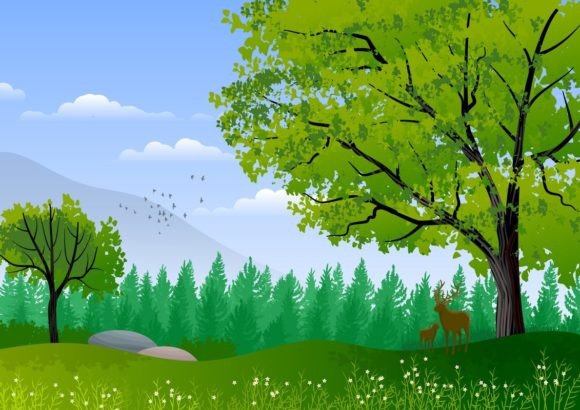
In a digital landscape often saturated with flat colors and generic gradients, finding a premium font or design asset that genuinely evokes a mood can be a game-changer for your brand identity. The collection known as 2 Illustrated Backgrounds. Landscape is more than just a backdrop; it is a narrative tool. This set consists of stylized digital art depicting a wild, natural environment—specifically featuring rolling hills, majestic mountains, and dense forests. The central subject captures a serene moment: a deer resting under the shade of a leafy tree, framed by a foreground border of flowering vegetation. It is a visual representation of peace and serenity, rendered in high-definition, large-dimension PNG formats.
As a designer or content creator, you understand that the background does half the heavy lifting in establishing a mood. These illustrated landscapes offer a specific personality that is difficult to replicate with stock photography. The style is stylized yet organic, avoiding the hyper-realism that can sometimes feel cold or sterile. Instead, it invites the viewer into a world that feels safe, calm, and timeless. Whether you are a blogger looking to set a relaxed tone, or an entrepreneur crafting a brand for a wellness product, understanding how to leverage these assets is key to elevating your visual storytelling.
Crafting Atmosphere: The Visual Personality of the Landscape
The immediate appeal of 2 Illustrated Backgrounds. Landscape lies in its composition. It balances a wild environment with a distinct sense of order. The inclusion of the deer in the foreground creates an instant focal point that draws the eye, while the surrounding flora softens the edges of the frame. This makes the asset incredibly versatile for editorial design and packaging design where you need space for text but don't want a boring, empty margin. The flowering vegetation border acts as a natural container, guiding the viewer's gaze inward.
When we talk about modern typography and layout, context is everything. A sans serif font with clean lines might feel too clinical against a harsh, industrial background, but when paired with this lush, illustrated forest, it creates a beautiful contrast between the digital and the organic. Conversely, pairing this background with a script font or a handwritten font amplifies the personal, artisanal quality of the scene. The high DPI ensures that even if you crop into the mountains or zoom in on the leaves, the integrity of the digital art remains intact, making it suitable for large-scale print projects like trade show banners or posters.
Strategic Applications for Brand Identity and Marketing
For the entrepreneur or brand strategist, choosing the right design assets is about alignment. You wouldn't use a chaotic, neon-drenched background for a meditation app, just as you wouldn't use this serene deer scene for a heavy metal band’s merchandise. 2 Illustrated Backgrounds. Landscape excels in industries that value tranquility, nature, sustainability, and mindfulness. However, its utility extends far beyond the obvious.
Digital and Web Design
In web design, these backgrounds can serve as a hero section for a homepage. Because the PNG format supports transparency and high resolution, you can layer web design elements over the natural scenery without losing legibility. Imagine a "Call to Action" button sitting gently on top of the mossy hillside. The visual hierarchy is naturally established by the landscape's depth; the mountains in the back, the tree in the middle, and the deer in the front create a ready-made Z-pattern or F-pattern for the eye to follow.
Social Media and Content Creation
For social media graphics, consistency is king. Using these illustrations as a recurring theme for your Instagram stories or Pinterest pins can create a cohesive "world" for your brand. If you are a blogger writing about slow living or a crafter selling handmade goods, overlaying your text on these backgrounds adds a layer of professionalism that a plain white square cannot match. It turns a simple announcement into an experience.
Print and Commercial Use
Don't limit your thinking to screens. The large dimensions make this asset a powerhouse for packaging design. A tea company, for instance, could use the flowering vegetation border as the design for a box lid, creating an unboxing experience that feels like a gift from nature. It is also ideal for book covers, particularly in the fantasy or self-help genres, where the theme of a journey through a wild but peaceful environment resonates deeply with the narrative.
Integrating Typography: Pairing Fonts with Nature
One of the most common challenges in using detailed backgrounds is ensuring your text doesn't get lost. This is where font pairing becomes critical. When working with 2 Illustrated Backgrounds. Landscape, you need a typeface that can hold its own without competing with the art.
- The Modern Contrast: Try pairing the illustrated scene with a geometric sans serif font. The rigid, mathematical lines of the typography will contrast beautifully with the organic, curved shapes of the trees and hills. This works well for logo design where you want to appear grounded yet forward-thinking.
- The Editorial Harmony: For editorial design, such as a magazine spread or a PDF guide, consider a sturdy serif font. Serifs have a traditional, authoritative feel that complements the timeless nature of the forest setting. This combination suggests reliability and heritage.
- The Artisan Touch: If your goal is to emphasize a personal connection, a creative font with handwritten qualities can bridge the gap between the viewer and the artwork. However, ensure the letter spacing is generous to maintain readability against the detailed foliage.
Remember, the goal of modern typography isn't just to look good; it's to communicate clearly. The background provides the emotion, but the font delivers the message. By treating the illustrated landscape as a partner to your typography rather than just a decoration, you create a more immersive user experience.
Practical Guidance for Designers and Creators
When you decide to incorporate 2 Illustrated Backgrounds. Landscape into your toolkit, approach it with a strategic mindset. First, evaluate the color palette of the illustration. The greens, browns, and soft floral tones are dominant. Ensure your chosen typeface colors either complement these earth tones or provide a stark, legible contrast (like a crisp white or deep charcoal).
Next, consider the "weight" of the image. Because it is a detailed illustration, it has visual weight. If you are using this for a business card or a flyer, don't overcrowd the layout. Let the negative space within the illustration breathe. You might find that placing your text in the upper sky area or the lower floral border works best to avoid obscuring the deer or the tree trunk.
Finally, think about the versatility of the two compositions provided. Having two different angles or framings of the same subject allows you to create a visual system. You could use one for the cover of a report and the other for the internal chapter pages, maintaining a professional brand identity