Japanese Waves Backgrounds Bundle: Design Meets Tradition
The rhythm of the ocean has long captivated artists, and in Japanese design, this fascination is immortalized in the iconic Seigaiha pattern. We often spend hours hunting for the perfect display font or crafting the ideal brand identity, yet the foundation of any great design—the background—is frequently overlooked. A cluttered or generic backdrop can undermine even the most sophisticated typography. This is where the Japanese Waves Backgrounds Bundle enters the conversation, offering a collection that bridges the gap between ancient artistry and modern digital utility.
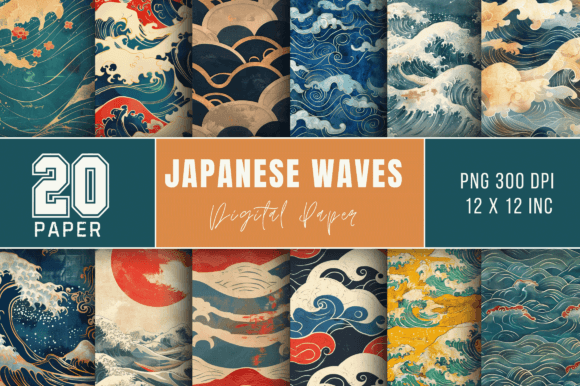
Unlike a standard serif font or sans serif font that dictates the voice of your text, this bundle establishes the atmosphere. It comprises 20 distinct digital papers, each measuring 12"x12" at a crisp 300 DPI. But beyond the technical specifications lies a specific visual language. The designs draw from traditional Japanese wave design motifs—stylized, concentric arcs that suggest the movement of water without the chaos of a realistic ocean. This creates a personality that is calm, structured, and inherently sophisticated. The collection balances the organic flow of Japanese water waves with the geometric precision required for professional graphic design.
Visual Personality and Texture
When we talk about the "personality" of a design asset, we are really talking about the feelings it evokes. The Japanese Waves Backgrounds Bundle does not scream for attention; rather, it commands respect through subtlety. The textures range from deep, navy blues reminiscent of traditional pottery to softer, more muted tones suitable for contemporary web design.
There is a tactile quality to these papers. Even in a digital format, they mimic the grain of high-quality cardstock or the weave of fabric. This is crucial for creators who want to avoid the flat, sterile look of digital gradients. For instance, if you are working on packaging design for a tea company or a wellness brand, these textures provide immediate authenticity. They serve as a premium font for your visual background—elevating the perceived value of the product before the customer even reads the copy.
Strategic Applications for Modern Creators
Understanding where to deploy these assets is key to maximizing their value. As a designer or content creator, you need assets that are versatile enough to span multiple platforms without losing their identity.
Editorial and Publishing
In editorial design, the background sets the stage for the narrative. These Japanese wave backgrounds work exceptionally well for chapter dividers in magazines or books, particularly those covering travel, history, or lifestyle topics. Because the patterns are seamless, they can be tiled to cover large spreads without visible breaks, maintaining a professional visual hierarchy. When paired with a clean modern typography style, the contrast between the traditional pattern and contemporary text creates a dynamic visual tension that holds the reader's eye.
Digital Marketing and Branding
For entrepreneurs and marketers, consistency is the bedrock of brand recognition. Using a specific Japanese wave texture across your social media graphics can create a cohesive "look" that followers recognize instantly. It is far more effective than relying solely on stock photography. Imagine a series of Instagram posts or Pinterest pins where the background subtly reinforces the brand's aesthetic. This bundle allows for that level of detail. It acts as a creative font for your visual language, providing a consistent voice across different campaigns.
Physical Products and Scrapbooking
The utility of this bundle extends far beyond the screen. For crafters and scrapbookers, the 300 DPI resolution ensures that the Oriental wave pattern prints sharply on home printers. It is ideal for card making, where a textured background can replace layers of physical paper, adding depth to handmade invitations or greeting cards. Small business owners can also use these files to create custom wrapping paper or tissue paper, adding a layer of branding to their unboxing experience that competitors using generic materials cannot match.
Technical Integration and Workflow
Adopting new assets into your workflow should be seamless. The Japanese Waves Backgrounds Bundle is delivered as PNG files, which ensures compatibility with virtually every design software, from Adobe Photoshop and Illustrator to Canva and Procreate.
Evaluating Fit and Pairing
When integrating these backgrounds, consider the concept of font pairing—but apply it to your background and foreground elements. A busy Japanese sea waves pattern might compete with a complex script font or a detailed handwritten font. In this scenario, the background may need to be desaturated or masked to ensure the text remains legible. Conversely, a bold display font often pairs beautifully with the geometric nature of the wave patterns, allowing the letterforms to pop against the structured lines.
It is also worth testing the opacity. Sometimes, the most professional application of a Japanese wave background is at 20-30% opacity. This creates a whisper of texture rather than a shout, ensuring that your primary content—whether it is a logo, a product photo, or a block of text—remains the hero of the composition.
Commercial Utility and Final Thoughts
One of the most practical aspects of this collection is the licensing. With both personal and commercial use allowed, designers and agencies do not need to worry about legal restrictions when using these assets for client work. This makes the bundle a valuable addition to any professional’s library of design assets.
Ultimately, the Japanese Waves Backgrounds Bundle is more than just a set of images; it is a tool for storytelling. It allows you to infuse your projects with a sense of history and tranquility. Whether you are designing a logo, laying out a brochure, or crafting a digital scrapbook, these patterns provide a reliable, high-quality foundation that enhances readability and elevates the overall aesthetic. By choosing the right background, you aren't just filling space; you are defining the context in which your audience experiences your work.